

Few corporate events compress as much importance into so few hours as the Annual General Meeting. Directors arrive. Major institutional investors arrive. Media often attends. The agenda runs to the minute. Furthermore, anything that goes wrong tends to get noticed publicly. For company secretaries, investor relations leads, and corporate communications managers running AGMs in Melbourne, the smallest logistical failures become disproportionately visible. Few of those failures are more common, or more avoidable, than ground transport mistakes.
Booking group chauffeur hire for AGM days isn’t simply a transport decision. It’s an operational decision tied directly to how the day is perceived externally and how smoothly it runs internally.
Why AGMs Demand a Different Standard of Ground Transport
A regular board meeting has flexibility. An AGM does not. The agenda is set weeks in advance. The chairperson’s address starts at a fixed time. The shareholder vote occurs in a fixed window. The post-meeting media interactions are scheduled tightly. Furthermore, every director needs to be in the room before the meeting opens, no exceptions. A director arriving even ten minutes late is genuinely difficult to absorb gracefully.
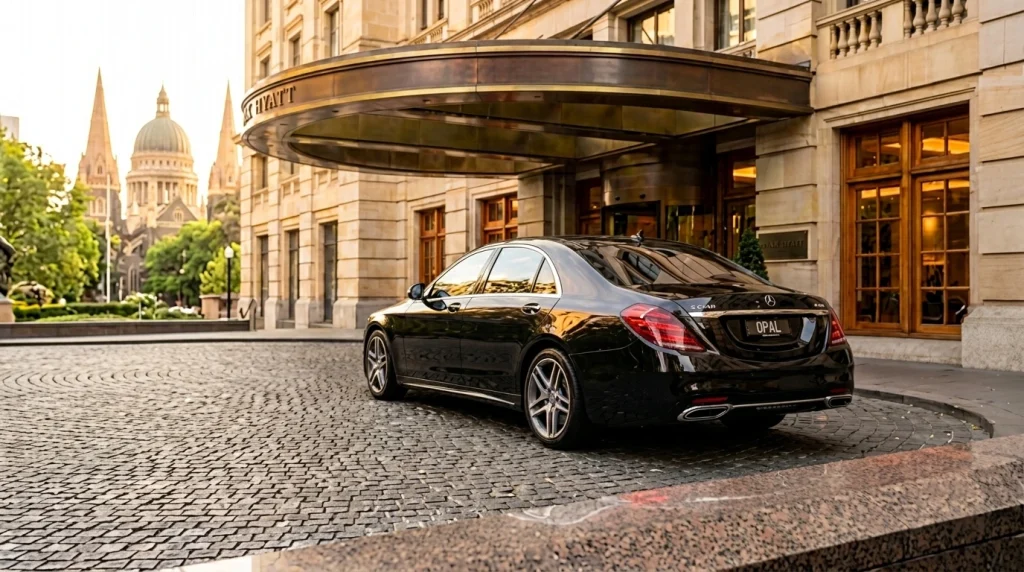
This is the operational reality that pre-booked group corporate transport in Melbourne quietly solves. Coordinated vehicle arrival, real-time route monitoring, and dedicated drivers familiar with the venue eliminate the entire category of risk that rideshare apps and ad-hoc taxi bookings introduce.
For listed companies, the stakes go further. Disclosed AGM start times are formally announced. Furthermore, market-sensitive announcements often follow the meeting. A delay in opening because a director got stuck in traffic is not the kind of story any company wants to manage.
What an AGM-Coordinated Chauffeur Plan Looks Like
A properly built AGM transport plan typically covers several distinct movements that operate simultaneously across the morning of the meeting.
The first is director arrivals. Each director travelling to the venue has their own preferred pickup point — a hotel, a residence, a corporate office, or in some cases a private jet at Essendon Airport. Furthermore, sequencing matters. The chair often arrives earliest. The CEO and CFO arrive shortly after. Non-executive directors typically arrive together or close in time. A coordinated VIP chauffeur in Melbourne arrangement assigns dedicated vehicles to each director with timed arrivals planned around the venue’s traffic flow.
The second is investor and institutional attendee arrivals. For larger AGMs, particularly those held at venues like the Melbourne Convention and Exhibition Centre or premium hotels, coordinated group corporate transport in Melbourne keeps key institutional attendees moving from their accommodation to the venue without delay or confusion.
The third is post-meeting movements. Immediately after the AGM concludes, directors often move to private lunches, media interviews, post-meeting analyst briefings, or follow-on board sessions. A pre-staged fleet eliminates the awkward post-AGM scramble that defines many otherwise polished events.
The Vehicles That Suit AGM Ground Transport
Vehicle choice matters more for AGM days than for regular corporate travel. Visibility is higher. Furthermore, the standard of the vehicle quietly signals the company’s operational discipline to anyone watching.
For director arrivals, the Mercedes-Benz S-Class or E-Class sedan remains the global benchmark. Quiet privacy. Refined acoustics. Excellent rear-cabin work conditions during the journey. For multi-passenger arrivals such as investor groups travelling together, the Mercedes V-Class preserves the executive feel while accommodating up to seven without compromise.
For visiting interstate or international directors, a coordinated Melbourne airport corporate pickup connects the airport leg seamlessly to the AGM leg. Furthermore, professional concierge car service in Melbourne adds the small operational details that polished events depend on — chilled bottled water in the door, current copies of the annual report on the rear seat if requested, and quiet privacy for last-minute review of the chairperson’s address.
What Sets Real AGM Coordination Apart From Ordinary Booking
Several quiet markers separate an operator who understands AGMs from one simply executing a booking.
Pre-event venue briefings. Drivers know exactly which entrance to use, which security checkpoint applies for directors versus general attendees, and where to stage discreetly while the meeting is in session.
Real-time traffic monitoring across the morning of the AGM. Furthermore, contingency rerouting if any incident affects expected arrival times.
Driver continuity from arrival through to post-event movements. The same chauffeur ideally collects the director, delivers them to the venue, waits discreetly nearby, and handles the post-meeting movement to lunch, media, or follow-on engagements.
Discretion as the working default. For high-profile listed companies, particularly those with significant media attention around an AGM, a celebrity chauffeur Melbourne standard with additional privacy protocols may apply. Confidential conversations between directors during transit must remain confidential.
Furthermore, for AGMs falling on the same week as other corporate events such as industry conferences or sponsor activations, integrated conference transport in Melbourne and corporate event transfers in Melbourne keep all of the company’s transport requirements running through a single operations centre rather than fragmented across multiple vendors.
How AGM Group Transport Accounts Get Set Up
The setup process is straightforward. Share the AGM date, venue, agenda timing, director list, accommodation arrangements, and any specific requirements. A coordinated plan is then built around the unique rhythm of the meeting. To discuss tailored AGM coordination or build a corporate account, request a quote or reach the team via the contact page.
A well-run AGM looks effortless from the outside. Behind the scenes, the operators who set that standard understand that ground transport is part of the operating infrastructure of the day, not an afterthought.